
What Types of Self-Adhesive Labels Are There? Detailed Explanation by Adhesive + 5 Major Classification Dimensions
💡 💡 At a Glance
Self-adhesive labels are divided into 6 main categories according to face material: coated paper, synthetic paper, PET, PE, transparent, and fragile paper; according to adhesive, they are divided into permanent type, removable type, freezer type, and high-tack type; according to application, they are divided into information labels, anti-counterfeiting labels, and logistics labels.
Last week, an e-commerce client asked me: "I want to attach labels to my products — what kind of self-adhesive should I choose?"
I said: "It depends on your product and the environment — pick 1 of the 5 major classification dimensions."
I said: "5 major dimensions — adhesive / substrate / shape / application / process. The 5 dimensions cross-combined create thousands of self-adhesive label varieties. This article won't explain 'what self-adhesive is' — it covers the 5 major classification dimensions + 4 types of adhesive decision-making + a 5-step selection process."
5 Major Classification Dimensions
Dimension 1: By Adhesive (5 Types)
| Adhesive | Initial Tack | Removal | Typical Scenarios |
|---|---|---|---|
| Permanent Adhesive | 2000-4000 N/m | Destructive | Product / Anti-counterfeiting |
| Removable Adhesive | 50-500 N/m | No Residue | Pricing / Promotion |
| Freezer Adhesive | 1000-2000 N/m | Partial Destructive | Cold Chain / Outdoor |
| High-Tack Adhesive | 4000+ N/m | Strong Destructive | Rough Surfaces |
| Easy-Tear Adhesive | 500-1000 N/m | Complete | Temporary / Ticketing |
Dimension 2: By Substrate (4 Major Types)
4 Major Types:
Self-Adhesive Substrates
├─ Paper (70%) — Coated Paper / Matte Paper / Art Paper / Kraft Paper
├─ Film (20%) — Synthetic Paper PP / PET / PVC / PE
├─ Metal (5%) — Aluminum Foil / Metallized Paper
└─ Specialty (5%) — Holographic Paper / Thermal Paper / Fragile Paper
Dimension 3: By Shape (4 Types)
4 Shape Types:
Rectangle (most common, 70%)
Circle / Oval (food / wine bottles, 15%)
Special Shape (10%, e.g., heart / five-pointed star)
Irregular (5%, e.g., die-cut special shapes)
Dimension 4: By Application (5 Types)
5 Application Types:
- Product Labels (60%) — product outer packaging
- Anti-counterfeiting Labels (10%) — unique code / tamper-evident
- Logistics Labels (15%) — barcode / thermal
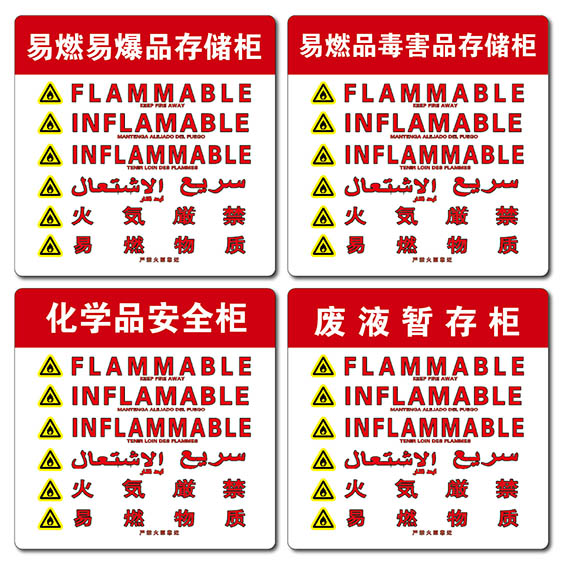
- Warning Labels (5%) — safety / chemicals
- Promotional Labels (10%) — pricing / holidays
Dimension 5: By Process (4 Types)
4 Process Types:
- Matte Lamination / Gloss Lamination (basic)
- Hot Stamping Gold / Hot Stamping Silver (metallic)
- Spot UV / Full UV (gloss)
- Embossing (3D relief)
4 Types of Adhesives Explained in Detail
Adhesive 1: Permanent Adhesive (Most Commonly Used)
3 Characteristics:
- Initial tack: 2000-4000 N/m (strong)
- Destructive removal (cannot be peeled off intact)
- Applications: merchandise / anti-counterfeiting / industrial
3 Material Combinations:
- Coated paper + permanent adhesive (most common)
- Synthetic paper + permanent adhesive (waterproof)
- PET + permanent adhesive (heat-resistant)
Adhesive 2: Removable Adhesive
3 Characteristics:
- Initial tack: 50-500 N/m (weak)
- No residue upon removal
- Applications: pricing / promotions / temporary
3 Material Combinations:
- Coated paper + removable adhesive (cheapest)
- Matte silver paper + removable adhesive (metallic look)
- Synthetic paper + removable adhesive (waterproof)
Adhesive 3: Freezer Adhesive
3 Characteristics:
- Initial tack: 1000-2000 N/m (medium)
- Low-temperature resistance -40℃
- Applications: cold chain / outdoor use in northern regions
3 Material Combinations:
- Synthetic paper + freezer adhesive (cold chain)
- PET + freezer adhesive (extreme cold)
Adhesive 4: High-Tack Adhesive
3 Characteristics:
- Initial tack: 4000+ N/m (extremely strong)
- Suitable for rough surfaces
- Applications: cardboard boxes / wood / concrete
5-Step Selection Process
Step 1: Define the Use Scenario
3 Judgments:
- Disposable vs. Reusable (permanent / removable)
- Room temperature vs. extreme temperature (standard / frozen)
- Smooth vs. rough surface (standard / high-tack)
Step 2: Choose the Substrate
3 Judgments:
- Waterproof requirement (yes / no)
- Tear-resistant requirement (yes / no)
- Temperature-resistant requirement (standard / high-temperature)
Step 3: Choose the Adhesive
Pick 1 of 4:
- Permanent (most common)
- Removable (temporary)
- Freezer-grade (cold chain)
- High-tack (rough surfaces)
Step 4: Choose Shape and Finish
Pick 1 of 3:
- Shape (rectangle / round / custom)
- Finish (matte lamination / hot stamping / UV / embossing)
- Add-ons (QR code / serial number)
Step 5: Test + Order
3-Step Verification:
- Small-batch test of 100 pieces
- Real-world scenario for 7 days
- Place bulk order after confirmation
To learn more about adhesive selection—see how many types of label adhesives are available?, or directly contact a LeXiang Packaging consultant, and you'll receive label selection recommendations + a quotation within 24 hours.
FAQ
How many types of self-adhesive labels are there?
5 classification dimensions: (1) By adhesive — permanent / removable / freezer / high-tack / easy-peel (5 types); (2) By substrate — paper / film / metal / specialty (4 main categories); (3) By shape — rectangle / circle / oval / custom die-cut (4 types); (4) By application — product / anti-counterfeit / logistics / warning / promotional (5 types); (5) By process — matte lamination / hot stamping / UV / embossing (4 types). 5-dimensional cross-combination creates thousands of self-adhesive labels.
How many types of adhesives are used for self-adhesive labels?
4 common adhesive types: (1) Permanent adhesive (most widely used) — tears with substrate damage, used for product labels, initial tack 2000-4000 N/m; (2) Removable adhesive — leaves no residue when peeled, used for promotions / price changes, initial tack 50-500 N/m; (3) Freezer adhesive — low-temperature resistant (-40°C), used for cold chain / northern outdoor use; (4) High-tack adhesive — enhanced adhesion, used for rough surfaces / hard-to-bond materials; (5) Easy-peel adhesive — peelable at specific temperatures, for temporary labels. 3 selection principles: (1) Product labels choose permanent; (2) Temporary labels choose removable; (3) Special environments choose dedicated adhesives.
How to choose adhesive for self-adhesive labels?
3 steps to choose adhesive: (1) Consider the application scenario — one-time use (permanent) / peelable (removable) / cold chain (freezer) / high temperature (high-tack); (2) Consider the surface — glass / metal / plastic / cardboard (different surfaces suit different adhesives); (3) Consider the environment — room temperature / high temperature / low temperature / humidity / oil contamination. 3 recommendations: product labels (permanent adhesive) + price labels (removable adhesive) + cold-chain food (freezer adhesive). It is recommended to do sample testing for 7 days before mass production.
How many types of substrates are used for self-adhesive labels?
4 main substrate categories: (1) Paper — coated paper / matte paper / art paper / kraft paper (most widely used, 70%); (2) Film — synthetic paper PP / PET / PVC / PE (waterproof + tear-resistant, 20%); (3) Metal — aluminum foil / metallized paper (industrial + beverage, 5%); (4) Specialty — holographic paper / thermal paper / security paper (anti-counterfeit + logistics, 5%). 3 selection guidelines: (1) Regular products choose coated paper; (2) Waterproof needs choose synthetic paper; (3) Anti-counterfeit needs choose holographic / security paper.
What is the difference between self-adhesive labels and ordinary labels?
3 differences: (1) Structure — self-adhesive has adhesive layer + release liner (pre-coated with adhesive), ordinary labels require additional glue application; (2) Usage — self-adhesive sticks directly (peel off the release liner and apply), ordinary labels require glue brushing (complicated operation); (3) Application — self-adhesive covers 90% of scenarios (product / logistics / anti-counterfeit), ordinary labels cover 10% of scenarios (special industrial). 3 advantages: (1) Fast operation (5 seconds per label); (2) Stable adhesion (pre-coated adhesive); (3) Suitable for automation (labeling machines).
🛍️ Recommended Products
📚 📚 Related Recommendations
Need a Custom Packaging Solution?
Learn more about packaging, or consult directly for a custom solution and quote