
Medical Device Packaging Box for Circumcision Surgical Instruments
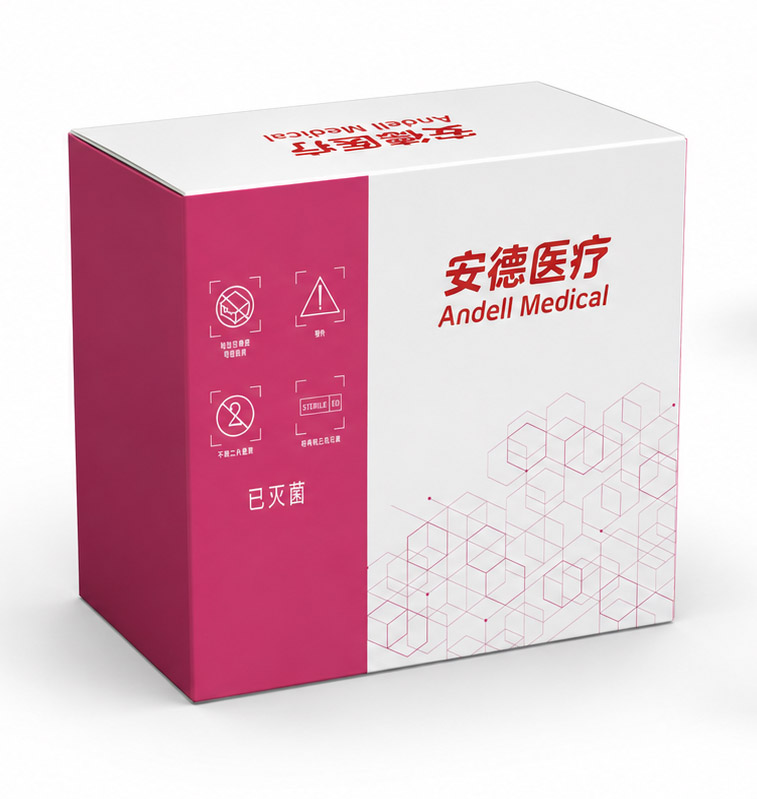
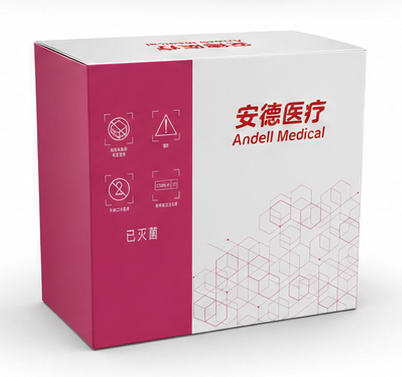
This medical device packaging box is laminated from 350g high-quality white cardstock for a rigid, sturdy structure that reliably protects the product during shipping, storage, and end use. Print is produced in PANTONE spot colors rather than standard four-color CMYK, delivering purer, brighter, more consistent color that better expresses the clean, professional, premium image a medical brand requires. The surface is flat and refined, with crisp corners and a balance of visual appeal and practical performance. Customizable to product dimensions, structure, and brand needs, it is widely used for medical devices, consumables, diagnostic reagents, and healthcare products.
📸 📸 Product Images
FAQ
Why choose 350g laminated white cardstock instead of regular white card?
Laminated board is thicker, stiffer, and offers better compression resistance. It is well suited to medium- and large-sized medical device packaging, lifting both product grade and protective performance.
What are the advantages of PANTONE spot color printing?
Spot color printing reproduces brand colors accurately, with more vivid and pure tones and high batch-to-batch consistency—making it especially suitable for corporate logos and brand standard colors.
Can the packaging box be customized to my product dimensions?
Yes. Full-process customization is supported, covering size, box type, internal fitments, printed content, and surface finishing.
Which medical products is this suitable for?
It is suitable for medical devices, single-use consumables, diagnostic reagents, nursing products, laboratory supplies, and other healthcare product packaging.
Do you support small-batch sampling and production?
Yes. Fast sampling, small-batch trial production, and bulk production are all available, making it easy to validate new products and support market launches.
What additional finishes can be added to enhance the look and feel?
Options include matte film, gloss film, spot UV, hot foil stamping, embossing/debossing, and tactile film—preserving a professional medical style while further elevating packaging quality.
📖 📖 More Details
This is a real medical device packaging case from our production line—350g laminated white cardstock construction, PANTONE spot color printing, balancing product protection with a medical-grade brand look.
The biggest difference between medical device packaging and an ordinary color box is not that it "looks more professional." It is that the packaging itself has to satisfy product protection, brand identification, batch management, and information accuracy in a medical scenario—all at the same time.
The client for this product makes circumcision surgical instruments—a Class II medical device. Packaging requirements for devices like these are stricter than for ordinary consumer color boxes, but where exactly they are stricter, and what the printer needs to solve for the client—that is what comes next.
What this project actually had to solve was more than "making a box"
From the outset, this device packaging had three things to address:
First, box strength—the packaging needs a certain level of compression resistance and rigidity through shipping, storage, and end use. Medical devices are not ordinary consumer goods, so the protection requirements during transit and stacking are higher.
Second, information accuracy—medical device packaging carries product name, model, specification, production details, lot number, and similar content that is far more sensitive than on a consumer box. Any single information error can directly affect the product's market launch, sale, or clinical use.
Third, brand color reproduction—the client's brand standard color must be rendered accurately. The company will subsequently have IFUs, labels, outer cartons, marketing materials, and other printed items; if the brand color on the packaging is off, it will undermine the consistency of the entire brand visual.
Why we chose 350g laminated white cardstock
Medical device packaging of this type cannot be judged on print quality alone. The product must withstand compression and maintain rigidity through shipping, storage, and end use.
For that reason, instead of using a single 350g white card sheet, this project uses a laminated white card structure—two sheets of 350g white card laminated together, giving the box better support while preserving the clean, orderly visual required for medical products.
This is a judgment the packaging factory has to make on a medical device project: when the client says "use 350g white card"—do they mean a single sheet or a laminated structure? A single sheet is lower cost and prints well, but the box is softer and tends to deform under stacking; laminated card costs a little more, but the box is crisp and stable under stacking—medical devices need the latter.
Why we used PANTONE spot colors
The client had clear requirements for the brand standard color, so instead of approximating it with four-color CMYK, we matched the PANTONE spot color to the client's brand color.
For a medical device company, the brand color on the packaging is rarely "close enough." Especially when the company will subsequently have IFUs, labels, outer cartons, marketing materials, and other printed items, color consistency directly affects brand visual unity.
This is another judgment the packaging factory has to make on a medical device project: when the client says "print in the brand color"—do we simulate with CMYK or use PANTONE spot color? CMYK simulation is lower cost and can "approach" the brand color, but color drift appears between batches; PANTONE spot color costs slightly more, but the color drift between batches is minimal—for a medical device client who will subsequently have IFUs and labels to print, spot color is the safer choice.
Five things this box actually has to do
The real role this medical device packaging box plays is not simple "packaging."
Transit protection—medical devices are more sensitive than ordinary goods to stacking, vibration, and temperature/humidity changes in logistics; the hardness and lamination integrity of the box directly determine whether the device arrives at the end user intact.
Storage stacking—in hospital device stores, SPD warehouses, and distributor warehouses, the stacking stability of the box determines space utilization and inventory loss rate.
Product identification—when a medical device is used at the point of care, nurses, doctors, and SPD warehouse staff need to identify model, specification, and lot number in the shortest possible time—the way information is presented on the box directly affects identification efficiency.
Brand presentation—medical devices are not consumer goods, but they still need brand recognition. When hospitals bid or clinical departments select devices, the visual impression of the box is an extension of the brand's professionalism.
Information carrier—medical device packaging carries more information than ordinary merchandise: product name, model and specification, production details, lot number, instructions for use, relevant registration information, and so on—the box is the carrier of all this information, and the layout directly determines how accurately the information can be read.
The most overlooked thing about medical device packaging is actually "version management"
This is something the packaging factory needs to pay particular attention to on a medical device project—many printers do not bring it up proactively, but paying for it once is costly.
The same device may carry different registration numbers, different IFU versions, and different language versions in different regions; the same product family may have 3–5 specification sizes; different batches may use different lot number formats. If these versions are not aligned in the archive before production, batch runs are prone to "mixed versions"—for example, the lot number format of one specification not matching the others, or the IFU for one regional version ending up in the box for another region.
Here is what we do: before production on every project, we run a layout check and sampling confirmation against the client's final approved files before entering batch production. For products involving multiple SKUs and versions, we recommend a version confirmation before formal production—once the client confirms all version files, the printer archives and aligns them before opening the press.
The underlying point is: the source of error in medical packaging is usually not a printing technical issue, it is a version management issue. Whether the printer helps the client align versions before production is a hidden indicator of whether that printer can actually handle medical device projects.
Product gallery
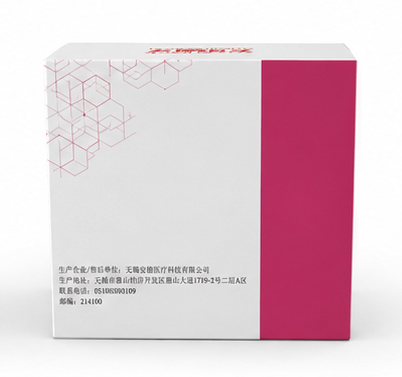
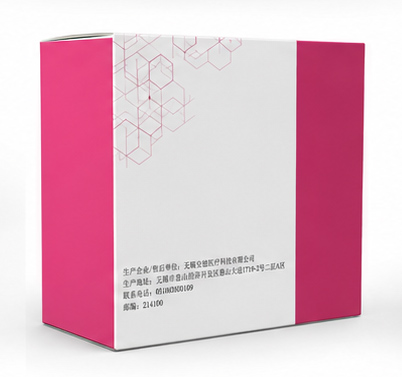
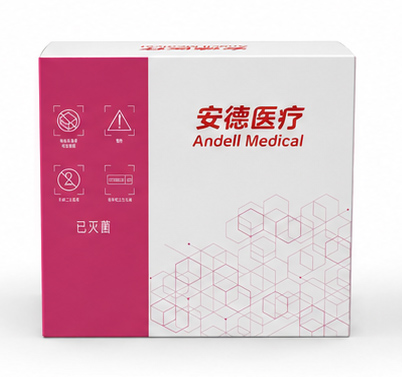
The real-product photos of this medical device packaging box—front, side, opened, interior, and detail shots—are available in the product image area. We produced genuine samples in 350g laminated white cardstock with PANTONE spot color printing, and all images are real photographs.
If you would like to see a physical sample box, contact us directly and we will send one over.
We also handle similar projects
If your product is also a medical device, medical consumable, or healthcare product packaging, send us your requirements directly—no matter which stage you are at right now.
You already have design files and need a factory quote—send the design files over; you only have the product and dimensions, and the packaging plan is not set yet—describe the product scenario; you want reference comparisons—tell us your product type and budget range, and we will share similar case references.
We recommend sending at least these: product images + product dimensions + approximate quantity + existing design files (if any). We can help you assess the following at no charge:
· Whether the box type is appropriate (lid-and-base / drawer / book-style / specialty box—how to choose)
· How to select materials (white card / duplex board / greyboard / corrugated—how to combine them)
· Whether the printing method and finishing are appropriate (CMYK vs PANTONE, foil / embossing / UV / lamination trade-offs)
· How to manage multiple SKUs and versions (avoiding mixed-version runs)
· Approximate cost range (unit price references for different configurations)
· Sampling and delivery lead times (calculating windows around holidays / pre-registration deadlines)
You do not need to lock down the final solution from the start. Even if you just want to ask "can you make this product for me," feel free to ask directly.
Other medical device packaging cases you may also be interested in
If you are working on packaging for medical devices, medical consumables, or healthcare products, here are a few other specific cases we have produced that you can review alongside this one:
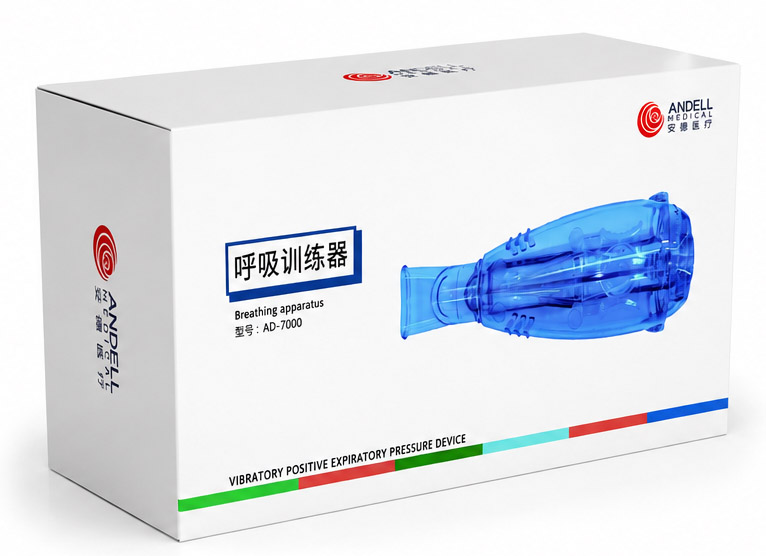
· Custom ventilator packaging box—400g white card with matte lamination, a universal solution for both e-commerce and hospital channels
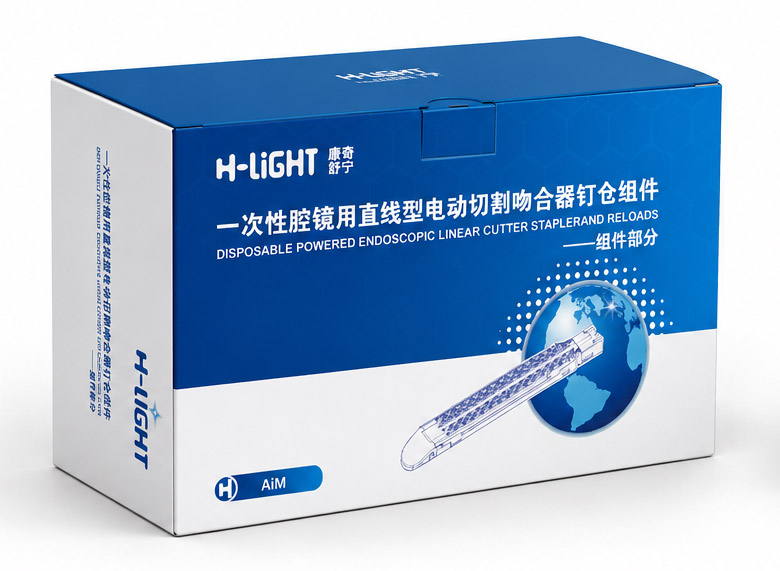
· Custom stapler cartridge component packaging box—all-white F-flute corrugated, high-strength protection, suitable for high-value consumables
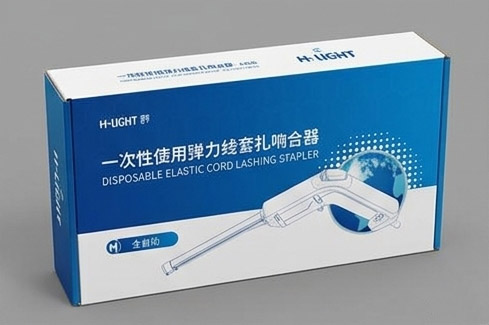
· Packaging for single-use elastic loop ligating stapler—350g laminated white cardstock, PANTONE spot color printing, a high-value consumable positioning solution
These cases share the same medical device context as this one—they are all real packaging projects we have produced, involving the same issues of laminated white card construction, PANTONE spot color, and multi-SKU version management. If you are choosing a printer, we recommend reviewing these cases together before making a decision.
📦 📦 Related Products
Need a Custom Packaging Solution?
Submit your needs for a professional quote and production advice