
Disposable Elastic-Loop Ligation Stapler Packaging
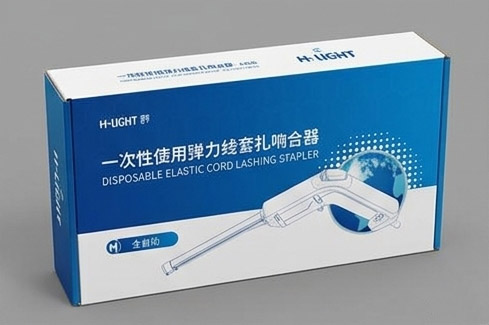
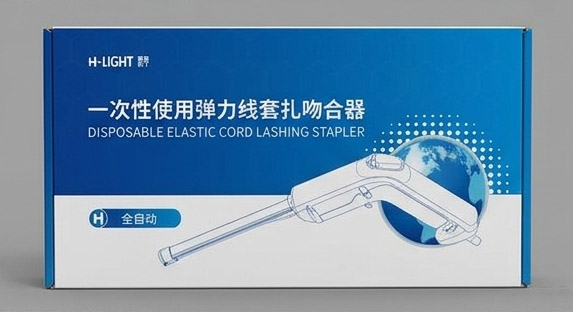
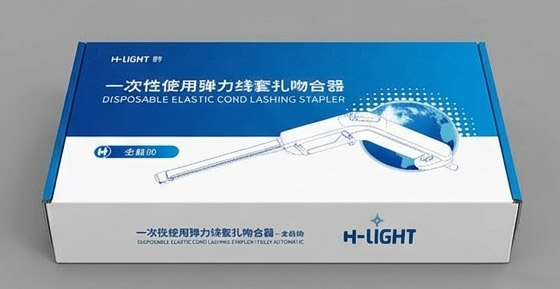
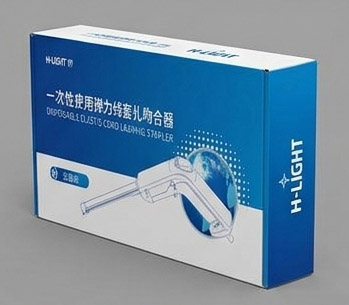
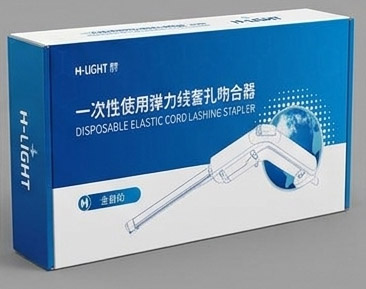
The disposable elastic-loop ligation stapler is a high-end fully automatic medical device for minimally invasive surgery. To match its precision and medical-grade sterility, the packaging uses medical-grade all-white F-flute corrugated board. F-flute delivers high density and crush-resistant rigidity, firmly protecting the instrument. The all-white finish signals a pure medical feel—leaving behind the rough look of ordinary yellow board and showing premium positioning from first glance.
📸 📸 Product Images
FAQ
Why specifically use "all-white F-flute" to package this stapler?
The disposable elastic-loop ligation stapler is a high-precision medical device with extremely high requirements for shock resistance and protection against external compression. F-flute is a type of micro-corrugation—its flute height is low and its density is high, providing wood-like rigidity to protect the product while keeping the overall size compact. The all-white design (including the inner liner, core, and face paper) is to meet the sterile, pure visual requirements of the medical industry, avoiding the "industrial shipping" feel of ordinary yellow corrugated paper and significantly elevating the overall medical grade of the product.
Will the all-white F-flute packaging affect environmental performance or sterility?
Not at all. The medical-grade all-white F-flute paper we use meets recyclable environmental standards, and the white cardstock and eco-friendly inks used do not leave harmful residues. It serves as the outer packaging (inner box / master case), mainly responsible for physical-level crush and impact resistance; the inner device is still protected by an independent medical-grade sterile blister pack or sterile pouch.
Is this ligation stapler for single use? How is safety ensured?
Yes, this product is strictly limited to single use. It undergoes strict ethylene oxide (EO) sterilization before leaving the factory—do not use if the packaging is damaged. The strong rigidity of the all-white F-flute outer box also effectively prevents damage to the internal sterile packaging caused by crushing of the outer box during storage.
📖 📖 More Details
Many packaging projects only show their real problems once production actually begins.
In a medical device packaging project, the gap between the design file and the final physical product often shows up in the following ways:
Screen color does not match the printed color
Actual paper texture differs from the design file
Small text becomes blurred after printing
A 1mm shift on a fold line deforms the entire box
LOGO position drifts from the design file
Exposed white edges at corners
Box body softer than expected
Product rattles inside the box
Product cannot be taken out
Box deforms after stacking in cartons
For ordinary consumer packaging, these issues may only mean a re-work. For medical device packaging, however, a single dimension, a single line of text, or a single version can mean the entire batch has to be re-processed.
This packaging for the disposable elastic-loop ligation stapler is a case we have actually produced. The point of this article is not material selection or brand positioning—it is one single thing: what LeXiang Packaging actually needs to confirm from the design file through to mass production.
Confirm the product first, not the box
When many medical device companies approach a printer, the first sentence is "I want to make a box of XX size"—but this usually has the process order backwards.
A truly mature packaging project should confirm the product first: product dimensions, product weight, product placement orientation, whether there are protruding parts, whether there are accessories, whether an instruction sheet is needed, and whether multiple models exist. Until all of this information is aligned, the box structure is just a guess.
For this elastic-loop ligation stapler packaging project, the first thing we confirmed with the customer was the product itself—the stapler's dimensions, accessories, sterile-packaging requirements, and clinical usage workflow. The box structure was only decided after all of these had been confirmed.
It is not "the customer says color box, we make color box"—it is confirming the structure
The core of packaging structure judgment comes down to three things: how the product is placed inside, how the product is taken out, and whether it moves during transport.
For devices such as the elastic-loop ligation stapler, nurses in clinical use need to open the box, remove the instrument, and confirm the model within a short time. How the box opens and closes, how well the inner liner fits, and how the instrument is positioned inside—these cannot be settled just by the design file; they can only be confirmed during production.
The value a packaging factory can add in structural judgment is: which directions of force the box body must withstand, whether the box will deform when stacked in transit, and how easy it is to remove the product. The design team may not understand these things, but the printer must.
The print file is not "close enough in color"
The confirmation items for medical device packaging print files are not the same as for ordinary consumer goods—the focus is not whether the colors look good, it is whether the information is accurate.
The print files finally confirmed for this elastic-loop ligation stapler packaging include: product name, model, specification, relevant registration or filing information, company information, batch number position, icons, and text. All of this information is ultimately subject to the customer's confirmed file—the printer's responsibility is to produce accurately according to the confirmed file, not to print something that "looks close enough" to the design file.
If this step goes wrong, it is far more serious than a small color difference in the design file—incorrect information on medical device packaging can lead directly to a recall of the entire batch.
Sampling is not about "checking if it looks good"—it is about "confirming whether it can be produced"
A common pitfall in the sampling phase is: the customer receives the sample and judges whether it "looks pretty", while the printer checks whether it "can be mass-produced"—these are two different things.
In the sampling phase of this project, we focused on confirming 7 things: dimensions, folding, slots, opening and closing, product fit, print effect, and text legibility. The point of sampling is to surface in advance the problems that only show up in mass production—for example, a 1mm deviation on a fold line is invisible on a single box, but on 5,000 boxes in mass production the cumulative error deforms the overall box shape.
If this phase is skipped or compressed, you save a few days of sampling time at the cost of an entire batch's risk during mass production—for medical device packaging, this is a step that cannot be cut.
Mass production is not the end—it is the start of the next batch
For many printers, mass production is the "end." For medical device projects, however, this batch's samples and confirmed files are the basis for the next reorder.
The final solution for this elastic-loop ligation stapler packaging project supports small batches, new products, and multi-specification production independently—50-unit MOQ, digital printing, each SKU with its own plate. The first batch can be 50–100 units to test the market; based on feedback you decide which to reorder and which to skip.
This means the mass production step is not the end—it is the starting point of the next batch. The previous batch's samples, confirmed files, and retained sample data all need to be built up in this step at the same time.
What medical device packaging fears most is not a small color shift, but "the wrong version"
This is the easiest pitfall for the printer to help the customer avoid in a medical device packaging project, and it is also the easiest thing for the design and procurement teams to overlook.
If the same product line has multiple specifications (Model A, Model B, Model C), multiple market versions (domestic, export, different language versions), and different filing or registration information, the real risk at this point is not "the print doesn't look good" but "the wrong version"—Model A packaged in Model B's box, regional versions swapped, registration numbers mixed up.
This kind of problem is far more serious than a small color difference—a wrong version on medical device packaging can directly cause problems during regulatory inspection.
Version confirmation mechanism recommended before production
For products that involve multiple specifications or versions, we recommend running one version confirmation before mass production—this step is usually skipped, but the cost of stepping on the pitfall once is far greater than the cost of doing this step.
The packaging documents should clearly state: product name, model, specification, version number, quantity, language, batch number format, relevant filing or registration information, and barcode. After the customer has confirmed all version documents, the printer files and aligns them before starting the press. For products that may later be reordered, we recommend retaining the final confirmed version—so that the next batch can be compared against the confirmed file and old files are not mistakenly reused.
The essence of this issue is: the error risk in medical device packaging is often not a printing technology issue, it is a version management issue. Whether the printer helps the customer align versions before production is the key to judging whether this printer can handle medical device projects.
The final confirmed solution for this case
The final confirmed solution for this disposable elastic-loop ligation stapler packaging box:
Box type: Top-and-bottom lid box
Material: 350g white cardstock laminated and formed
Printing: PANTONE spot-color printing
Surface finish: Matte film lamination
Quantity: 50-unit MOQ
Production lead time: 3–7 working days
Support: Multi-spec / multi-version management + retained-sample comparison
Make your design come to life
If you already have a medical device packaging design file but are not sure whether the material is suitable, whether the structure can be produced, whether the dimensions are reasonable, whether the print file has problems, or how many units to start with—you can send us the design file and product information before mass production.
We would rather find the issue before it enters production.
Send us your design file
You may also be interested in these medical device packaging cases
If you are working on packaging for medical devices, medical consumables, or healthcare products, here are several other specific cases we have completed that you can review together:
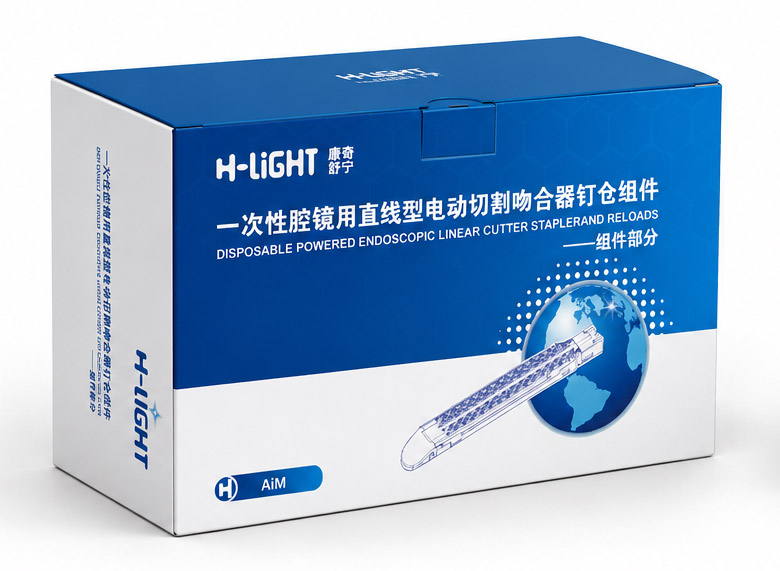
· Stapler cartridge component packaging box customization—All-white F-flute, protective solution for high-value consumables
· Breast circumcision surgical device packaging box—350g white cardstock laminated + PANTONE spot color, multi-SKU medical device solution
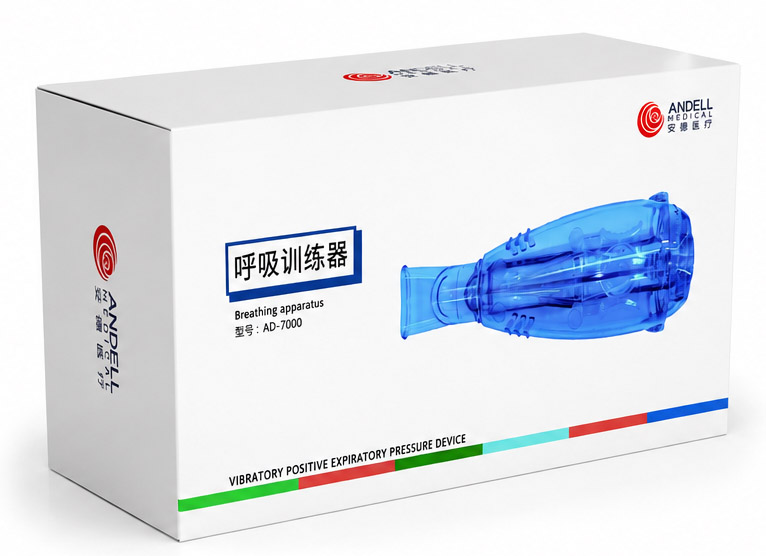
· Respiratory trainer packaging box customization—400g white cardstock with matte film lamination, suitable for both home-care and hospital channels
These cases share a similar medical device background with this one—they approach from different angles such as material judgment, version management, and end-user scenarios. If you are choosing a printer, we recommend reviewing these cases together before deciding.
📦 📦 Related Products
Need a Custom Packaging Solution?
Submit your needs for a professional quote and production advice